
Key takeaways
- Pink shower staining can be caused by microbial biofilm
- not simply dirt or mould.
- Damp areas such as silicone
- grout and door tracks are common problem spots.
Cleaning removes what’s there today. The real question is why the pink keeps coming back in exactly the same place.
Why Does My Shower Keep Turning Pink?
You clean the shower, the pink marks disappear, and a week or two later they're back.
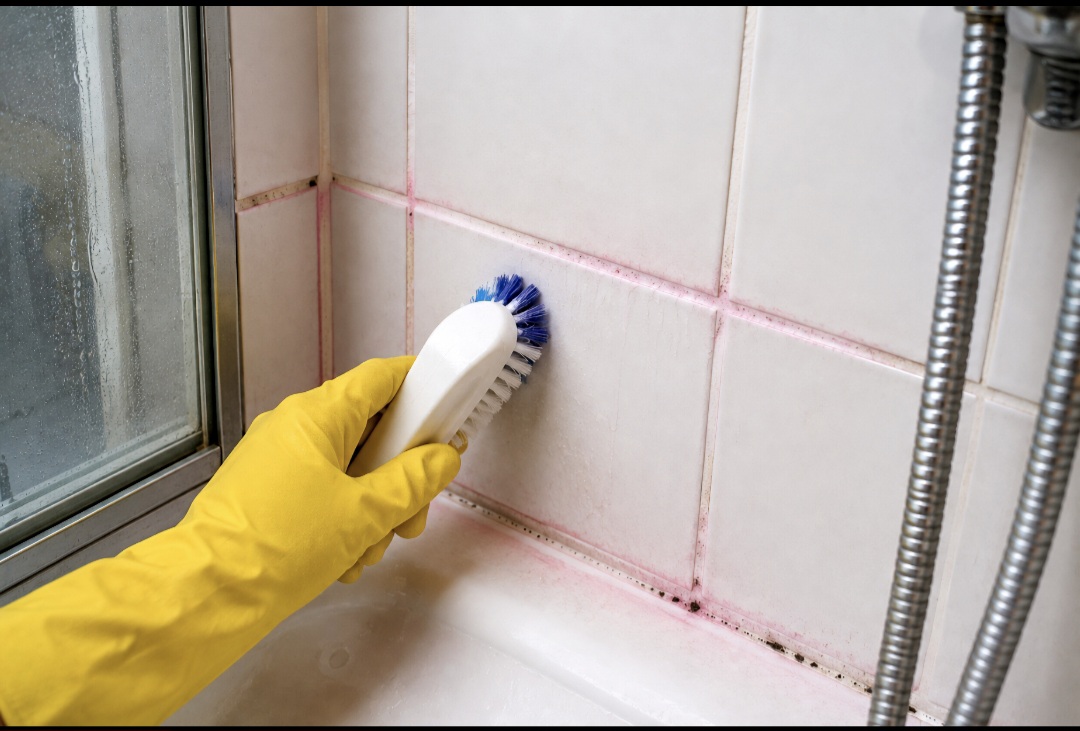
They usually show up in familiar places: along the silicone seal, between grout lines, around the plughole or tucked inside the shower-door tracks.
So what is the pink stuff – and why does it keep coming back?
The short answer: what people often call “pink mould” can actually be a biofilm made up of microorganisms growing on damp bathroom surfaces.
And no, it doesn't necessarily mean there's something wrong with your water.
The UK's Drinking Water Inspectorate (DWI) specifically identifies pink, orange and black staining in showers, on grout, shower curtains and around taps as places where biofilms can appear.
That's useful because it changes how you approach the problem. You don't just need to ask “How do I clean this?”
You need to ask “Why does it keep growing here?”
First: is it actually pink mould?
“Pink mould” is the name you'll commonly see online, but it isn't a particularly accurate diagnosis.
The DWI describes biofilms as mixtures of microscopic organisms that have colonised and grown on a surface. These can include bacteria, fungi and other microorganisms.
You may also see individual species of bacteria blamed for pink bathroom staining online. The problem is that you can't identify exactly what's growing in your shower simply by looking at its colour.
For cleaning purposes, there's a more useful way to think about it:
If a warm, damp part of your shower repeatedly develops pink or orange staining, you may be dealing with microbial growth rather than ordinary dirt.
Why your shower is such a good place for it
Think about what happens every time someone takes a shower.
The room gets warm. Everything gets wet. Water settles into corners, joints and tracks. Then you add soap, shampoo, conditioner and other bathroom products.
The DWI notes that soaps, aerosols and sprays can provide an additional food source that encourages the organisms responsible for these growths.
Some of the shower dries quickly. Other parts don't.
And that's where things get interesting.
Look at where the pink comes back
Before attacking it with another cleaning product, have a look at where the staining actually returns.
| Where the pink appears | What to look for |
|---|---|
| Along the bottom silicone | Water sitting against the seal after showering |
| Inside door tracks | Small amounts of trapped water that take a long time to evaporate |
| Around the plughole | Persistent moisture plus soap and other residues |
| Between tiles | Grout remaining damp after the surrounding tiles have dried |
| On a shower curtain | The curtain staying wet, particularly if it's left bunched together |
| Across several areas | How quickly the whole bathroom dries and whether ventilation is effective |
If the pink stuff always comes back in exactly the same places, that's a useful clue.
Those places may simply be staying wet for longer than the rest of your shower.