Key takeaways
- Most self-employed domestic cleaners in the UK start with under £1500 in realistic setup costs.
- Recurring weekly clients usually create far more stable income than one-off cleans.
- Trust punctuality and communication matter more long term than low pricing.
- AI is changing scheduling and booking expectations
“Good cleaning businesses are rarely built through advertising alone. Most grow through consistency, trust and becoming part of somebody’s weekly routine.”
How To Start A Domestic Cleaning Business In The UK
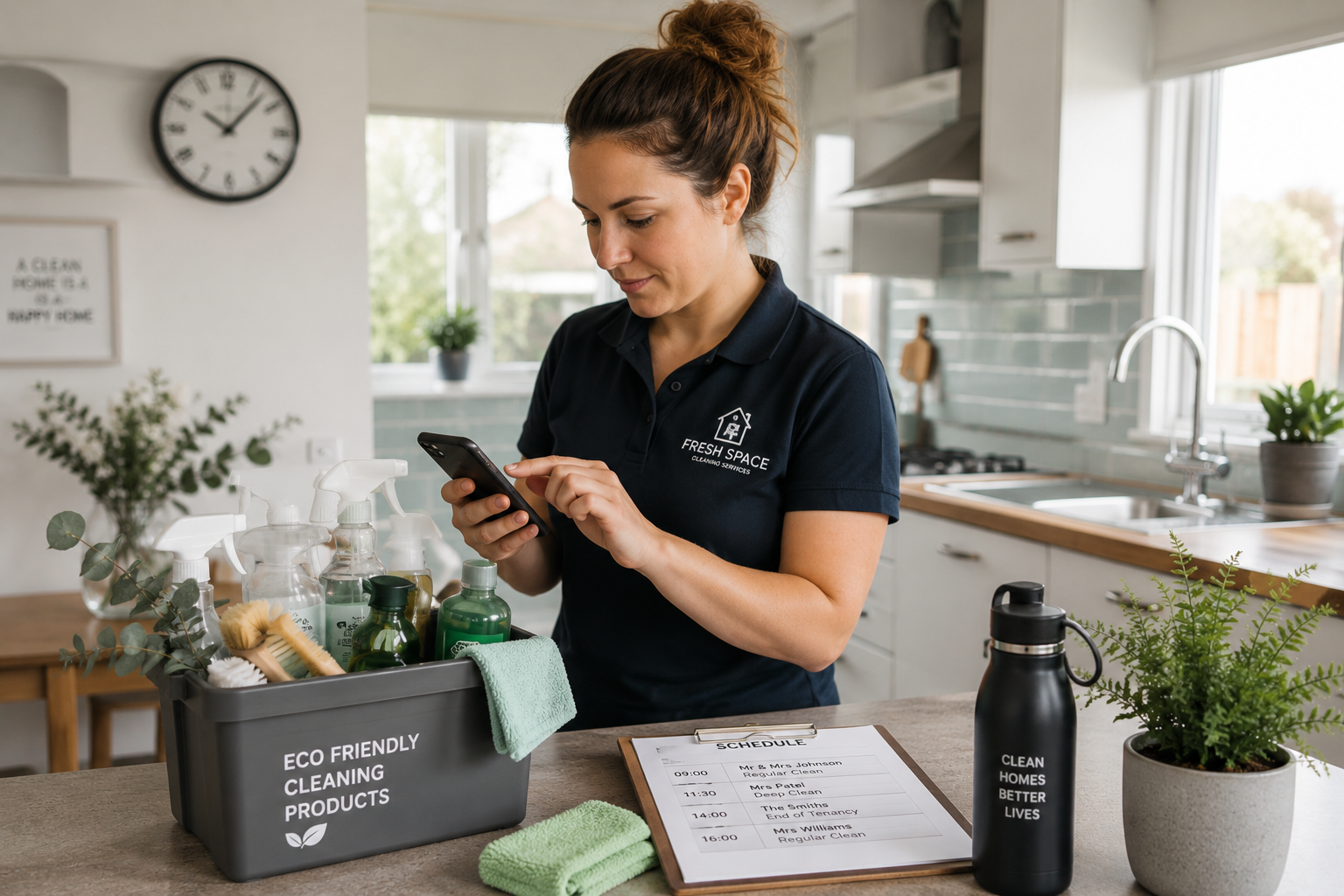
Starting a domestic cleaning business in the UK remains one of the most accessible ways to build flexible self-employed income in 2026. Demand continues to grow across busy family households, retirement areas, commuter towns and holiday-let locations — particularly for trusted cleaners who communicate well and show up consistently.
Yet the reality is often less glamorous than social media suggests. Most successful cleaning businesses are built slowly through recurring clients, reliability and local reputation rather than overnight growth.
There is also a quieter truth many guides ignore: cleaning is deeply practical work. It involves time management, emotional resilience, physical stamina and trust inside somebody else’s home.
Good cleaning changes the atmosphere of a home before it changes the appearance.
How AI Is Changing The Cleaning Industry
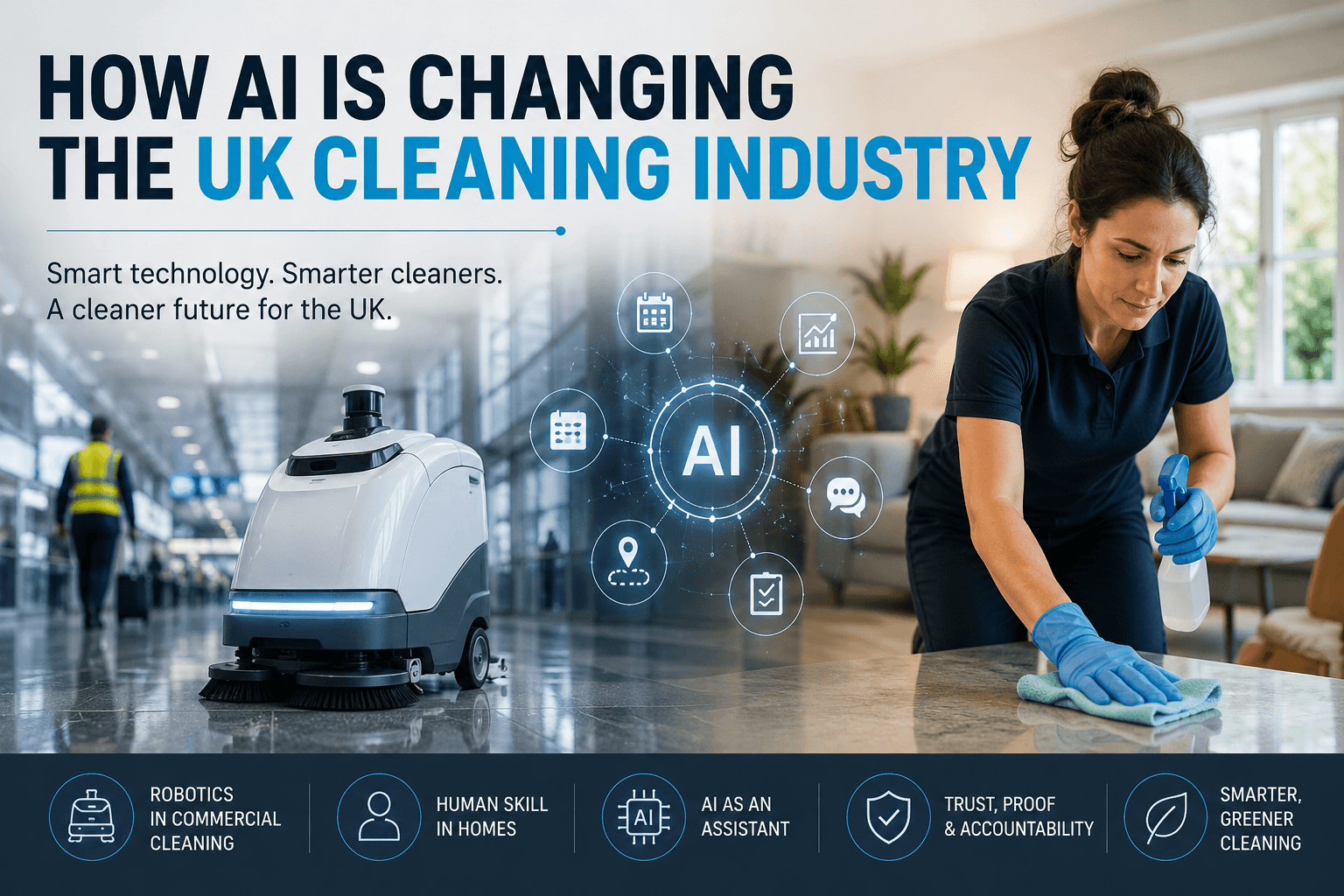
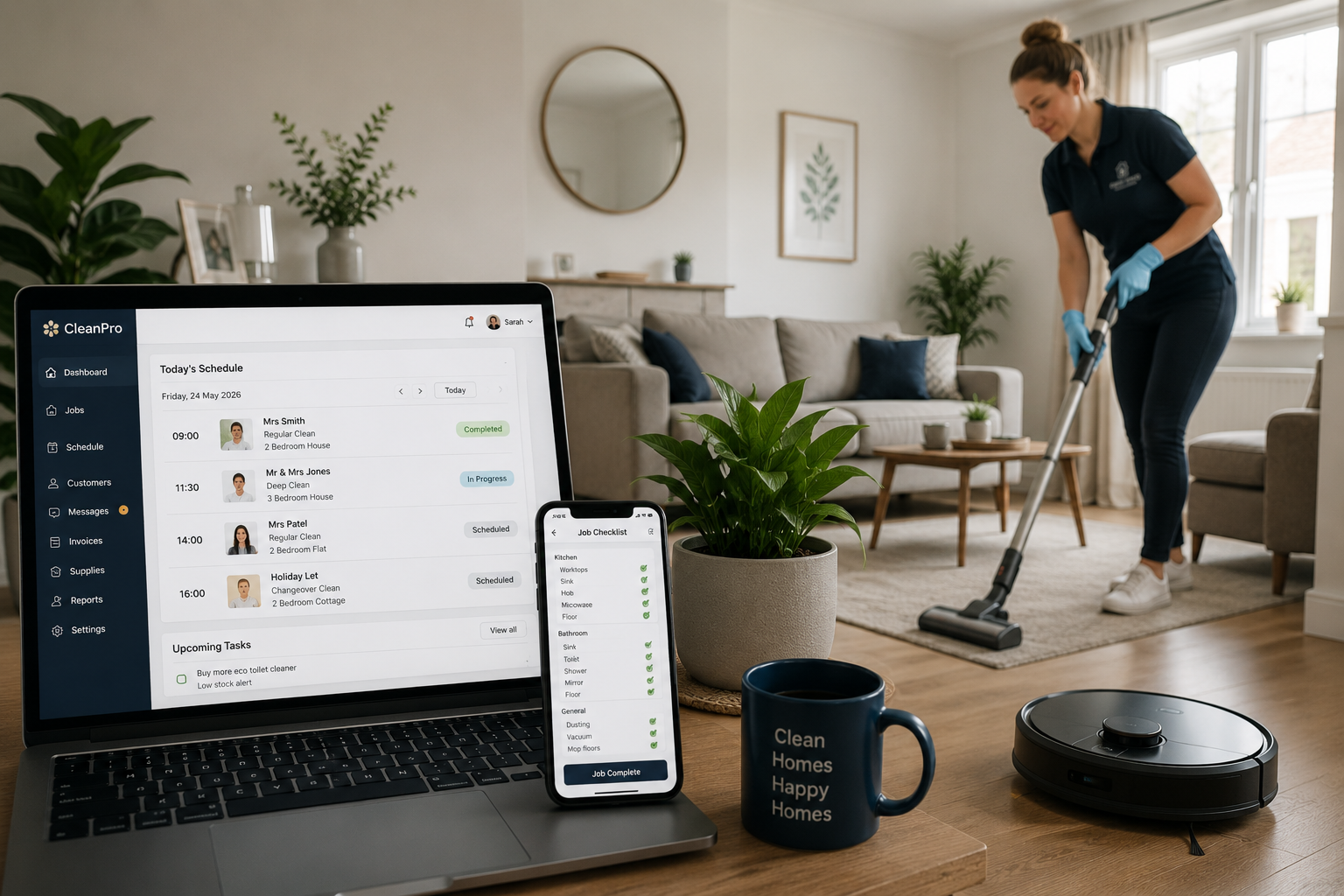
AI and automation are already changing parts of the UK cleaning industry, particularly around scheduling, quoting, logistics and commercial cleaning operations.
But domestic cleaning remains far harder to automate fully.
Where Cleaning Automation Is Growing Fast
Commercial environments with predictable layouts are increasingly using robotic floor scrubbers, autonomous vacuums, sensor-driven cleaning systems, AI route optimisation and smart maintenance reporting.
These systems are becoming more common in warehouses, airports, shopping centres, supermarkets, large office buildings and hospitals.
Why Domestic Cleaning Is Different
Homes are emotionally and physically unpredictable environments.
Children leave toys across floors. Pets move constantly. Clients request last-minute changes. Kitchens vary wildly in grease build-up. Family routines shift weekly.
A robot can vacuum a warehouse route. It struggles with deciding whether a teenager's pile of clothes is laundry, storage or simply part of the room.
Trust also remains deeply human.
AI As An Assistant Rather Than A Replacement
Many cleaners are already using AI tools without necessarily describing them that way.
- Scheduling routes
- Automatic reminders
- Customer messaging
- Quote generation
- Availability management
- Review collection
- Invoice automation
The cleaners most likely to succeed long term may not be those competing against technology — but those quietly using it to become more organised, responsive and efficient.