Key takeaways
- AI is already transforming commercial cleaning through robotics
- scheduling software and route optimisation.
- Domestic cleaning remains difficult to automate because homes are unpredictable
- emotional and trust-based environments.
“Good cleaning still depends on judgement. Technology can optimise a route, but it cannot yet understand why a parent suddenly asks for help before guests arrive, or why a tired household needs the kitchen reset before anything else.”
Technology has a habit of arriving quietly before people realise daily life has changed around it.
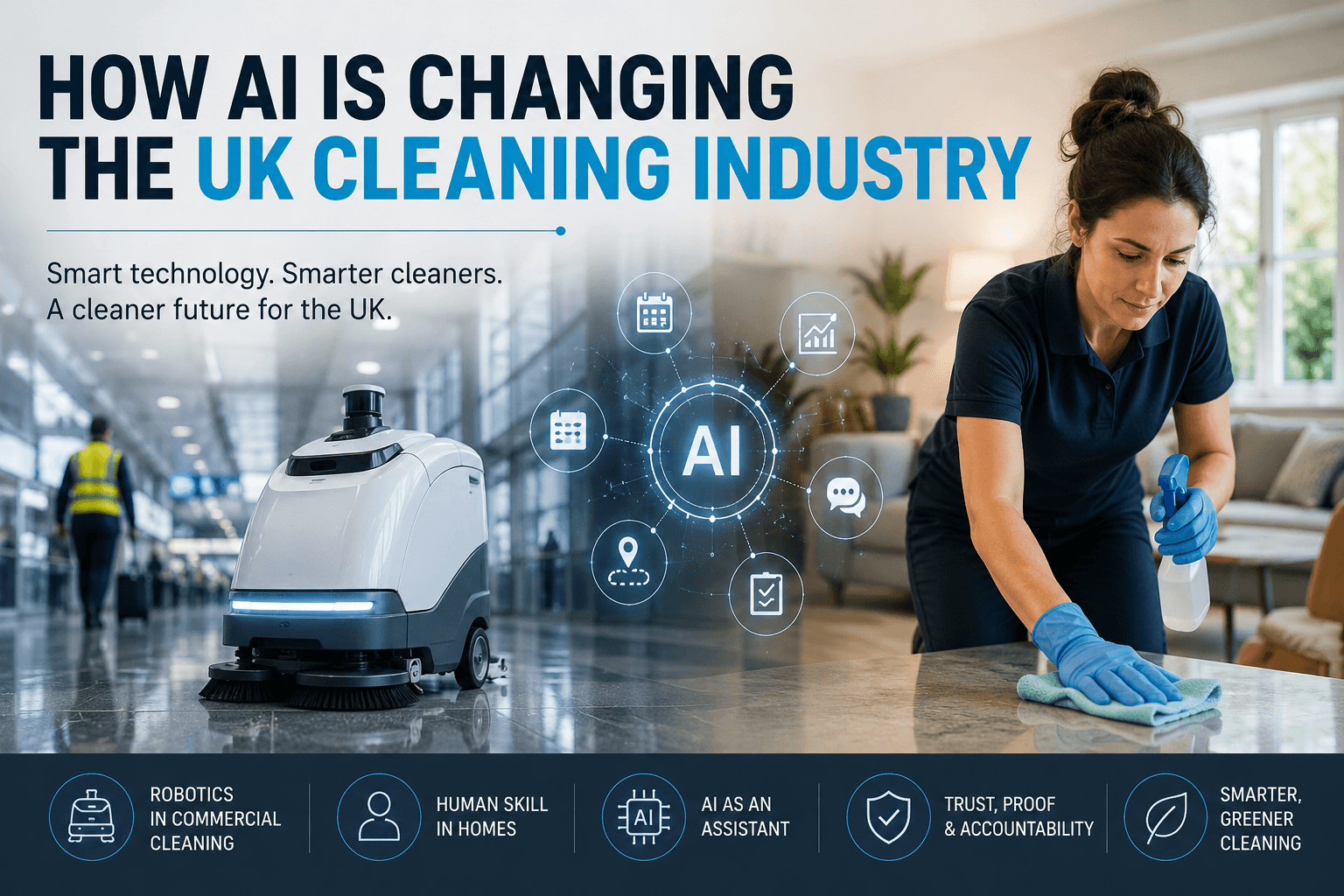
A few years ago, robotic vacuums still felt slightly novelty-driven — the kind of gadget people bought out of curiosity before leaving it forgotten under a sofa. Today, autonomous cleaning machines quietly move through supermarkets, airports and office corridors across the UK while software handles scheduling, quoting and customer messaging behind the scenes.
The cleaning industry is already changing. The important question is not whether AI exists within cleaning anymore. It is where automation genuinely works — and where human judgement still matters far more than software.
That distinction matters because cleaning is not one industry. A warehouse floor at 2am behaves very differently from a busy family kitchen at 6pm.
On FindTrustedCleaners.com, current marketplace behaviour already reflects a shift towards faster replies, transparent pricing and clearer availability. Households increasingly expect cleaning services to feel as frictionless as booking travel or ordering groceries online. At the same time, trust-led domestic cleaning remains deeply personal and heavily human.
Good cleaning still depends on judgement. Technology can optimise a route, but it cannot yet understand why a parent suddenly asks for help before guests arrive, or why a tired household needs the kitchen reset before anything else.
Quick Answer
AI is already changing parts of the UK cleaning industry, particularly commercial cleaning, scheduling, quoting, route planning and customer communication.
Large commercial environments such as warehouses, supermarkets, airports and offices are increasingly using robotic floor scrubbers, autonomous vacuums and sensor-driven cleaning systems to reduce repetitive labour and improve efficiency.
Domestic cleaning, however, remains far harder to automate. Homes are unpredictable environments involving trust, clutter, pets, children, personal belongings and constant variation. Most cleaning services across UK households still rely heavily on human cleaners, especially for deep cleaning, end of tenancy cleaning and oven cleaning.
Key Takeaways
- Commercial cleaning faces higher automation risk than domestic cleaning.
- AI is increasingly used for scheduling, pricing, admin and customer communication.
- Households now expect faster booking, clearer pricing and live cleaner availability.
- Human cleaners supported by smart technology are likely to outperform purely manual competitors.
How AI Is Already Being Used In Cleaning
AI and automation are already common in large-scale commercial cleaning environments across the UK.
Many airports, supermarkets and logistics centres now use autonomous floor cleaning machines capable of mapping routes, detecting obstacles and returning to charging stations independently.
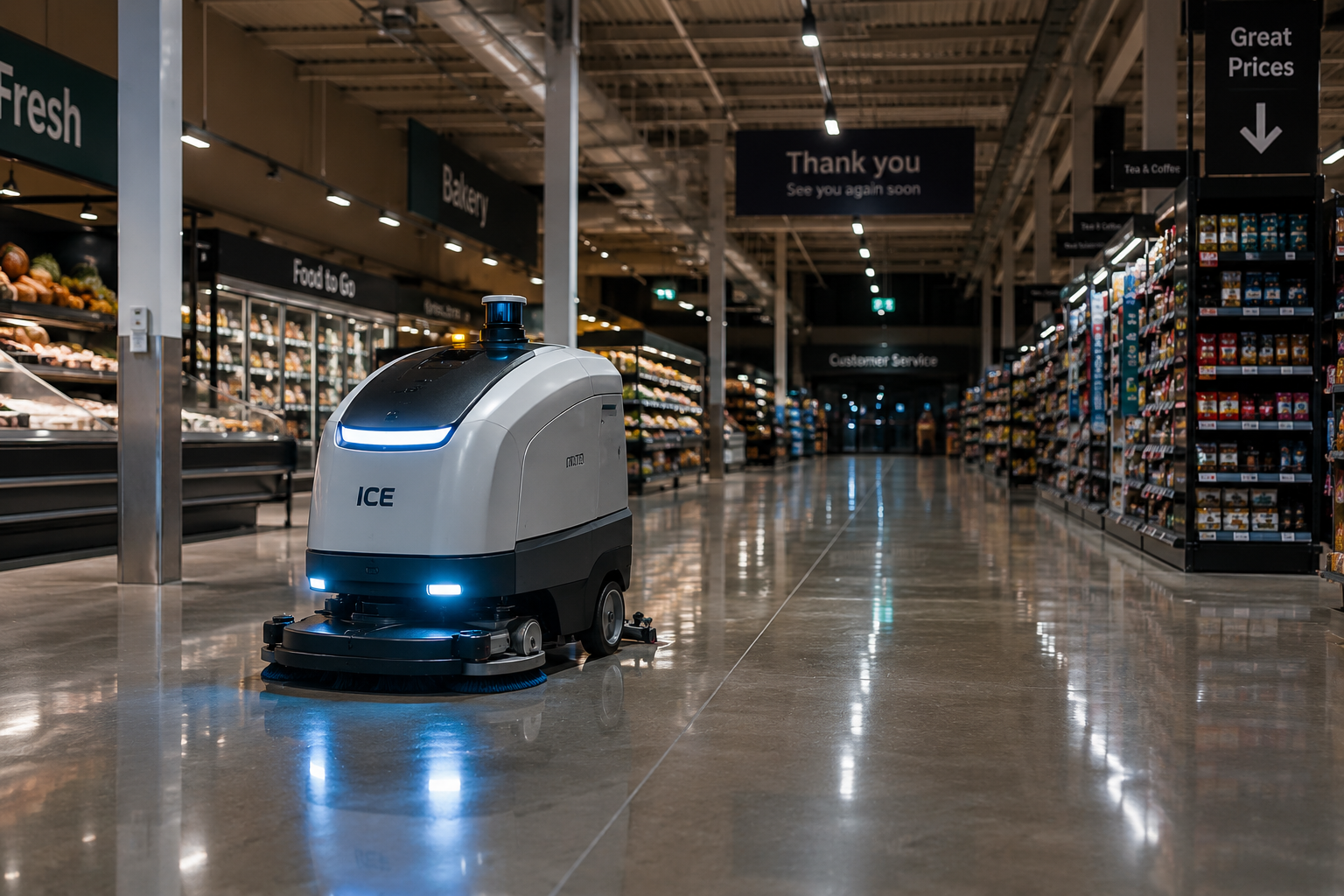
These systems typically combine:
- LiDAR navigation
- sensor-based obstacle detection
- route optimisation software
- automated water usage control
- self-charging systems
- usage analytics and maintenance reporting
The logic is fairly straightforward. Commercial environments are predictable. Floors are wide, layouts remain consistent and cleaning tasks repeat daily.
A warehouse does not suddenly leave Lego bricks across the floor five minutes before a cleaner arrives.
That predictability makes automation economically attractive.
| Cleaning Environment | Automation Potential | Reason |
|---|---|---|
| Warehouses | High | Predictable layouts and repetitive floor cleaning |
| Supermarkets | High | Large uninterrupted floor areas |
| Office corridors | Moderate to high | Routine maintenance cleaning |
| Domestic homes | Low | Unpredictable environments and trust-led tasks |
| Oven cleaning | Very low | Specialist manual judgement and dismantling work |
| End of tenancy cleaning | Low | Variable property condition and detail-heavy tasks |
Why Domestic Cleaning Remains Deeply Human
Most UK domestic cleaning work still depends on human flexibility, trust and situational judgement.
Homes are emotionally lived-in spaces rather than controlled environments. That matters far more than many technology headlines suggest.
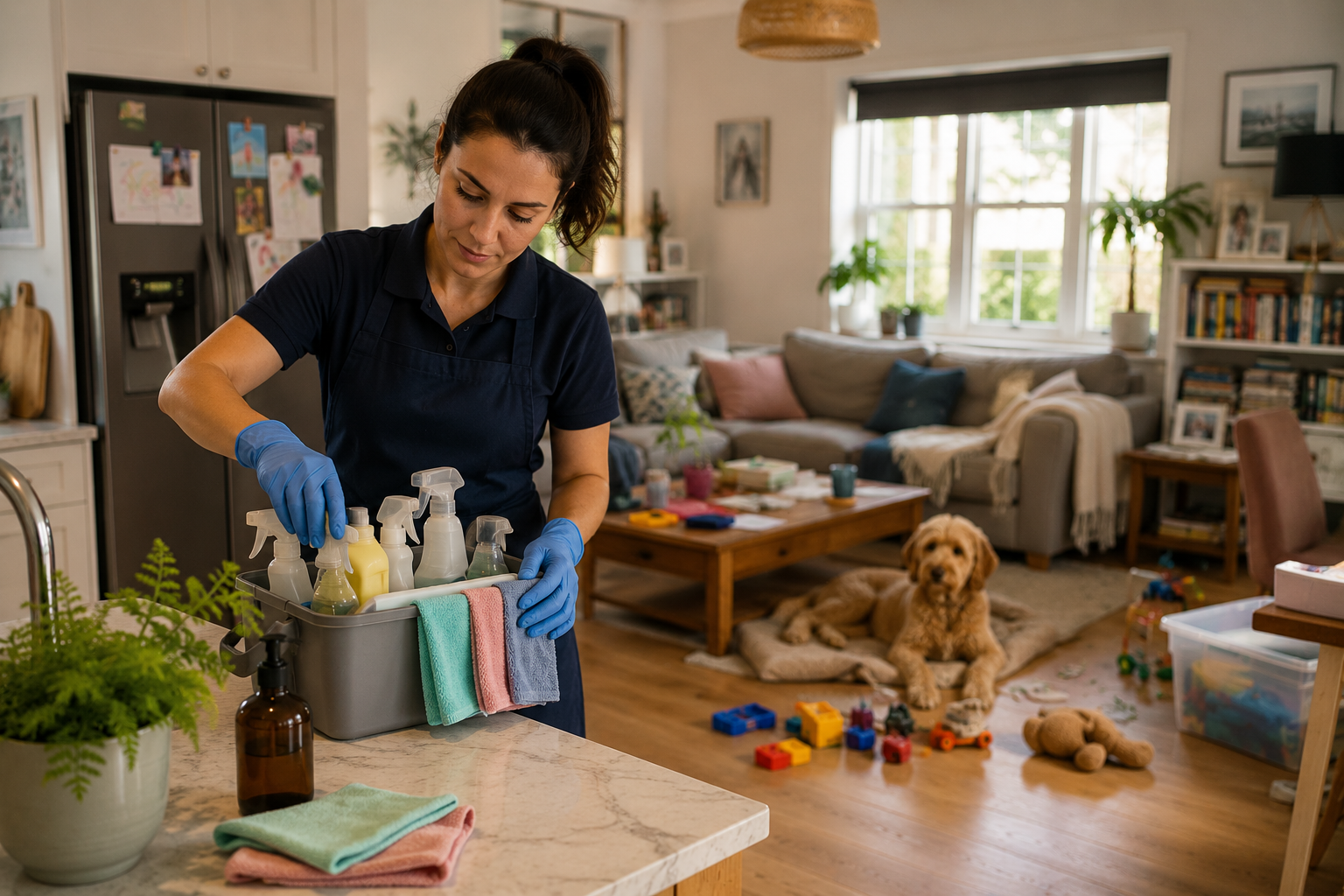
A domestic cleaner may arrive to find:
- pets reacting unpredictably
- children's toys covering floors
- last-minute requests from homeowners
- fragile sentimental items
- grease build-up requiring judgement
- cluttered kitchens
- elderly clients needing conversation and reassurance
- changing priorities from room to room
Even something as simple as cleaning a bathroom involves hundreds of subtle decisions humans make automatically.
How much pressure should be used on a surface? Which products are safe around pets? Which stains need stronger treatment and which require caution? When does a cleaner stop following a checklist and start responding to the reality of the room?
Those judgement calls are difficult to automate.
Most people notice poor cleaning not because something obvious was missed, but because the atmosphere of the home still feels unsettled afterwards.
“Good cleaning changes the atmosphere of a home before it changes the appearance.”
AI As The Assistant Rather Than The Replacement
For many cleaners, AI is becoming an operational tool rather than a direct competitor.
Across the UK cleaning sector, technology is increasingly helping with:
- scheduling
- route optimisation
- automated reminders
- quote generation
- customer support
- invoice handling
- availability management
- review collection
Many cleaners may already be using AI-powered systems without describing them as AI.
Modern booking platforms increasingly prioritise:
- live availability
- faster response times
- transparent pricing
- mobile booking experiences
- digital communication
This shift mirrors broader consumer behaviour. People now expect services to feel immediate.
Waiting several days for a vague quote increasingly feels outdated, particularly for recurring services such as regular domestic cleaning or window cleaning.
On platforms such as FindTrustedCleaners.com, marketplace behaviour increasingly reflects this demand for faster comparison, clearer availability and easier discovery of local cleaners.