
Key takeaways
- Overflowing gutters and roof moss can eventually lead to damp
- staining and structural damage.
- Plants growing in gutters usually indicate long-term blockages and trapped organic debris.
- Moss-covered roofs can loosen tiles and block drainage systems during heavy rain.
Most roof and gutter problems begin quietly, long before water ever enters the house.
Most roof and gutter problems do not begin dramatically.
There is rarely a sudden collapse or catastrophic leak at first. Instead, the signs arrive quietly. A damp patch near the ceiling corner. Water spilling strangely over the gutter during heavy rain. A roof that slowly turns green over winter without anyone paying much attention.
Then one day the outside problem becomes an inside one.
Across the UK, blocked gutters, roof moss and neglected drainage systems are some of the most common causes of preventable exterior property damage. Yet many homeowners miss the warning signs for months because the deterioration happens gradually.
If you are comparing gutter cleaning services, looking into roof cleaning, or browsing trusted local exterior cleaners, understanding the early signs can prevent far larger repair bills later.
Quick Answer
Common warning signs of blocked gutters or roof maintenance problems include overflowing gutters, moss-covered roof tiles, damp patches inside the home, plants growing from gutters, staining on exterior walls and water spilling over gutter edges during rain.
These issues often develop gradually as moss, leaves and debris trap moisture and block normal drainage. Left untreated, they can eventually contribute to damp, slipped roof tiles, blocked drains and internal water damage.
Most exterior drainage problems are significantly cheaper to maintain early than repair later.
Key Takeaways
- Overflowing gutters usually indicate blockages rather than excessive rainfall.
- Roof moss traps moisture and can gradually loosen tiles over time.
- Damp patches inside the house may originate from exterior drainage failures.
- Plants growing from gutters are often signs of long-term neglect and trapped organic debris.
Why Exterior Problems Often Become Interior Problems
Water almost always follows the easiest available path.
When gutters overflow, downpipes block or roof drainage slows down, rainwater starts moving differently across the property. Instead of being channelled safely away from the house, moisture begins soaking into areas never designed to stay wet for long.
That can mean:
- Water tracking behind fascia boards
- Moisture soaking brickwork repeatedly
- Damp entering roof spaces
- Drains backing up during heavy rainfall
- Exterior walls staying wet for extended periods
Most homeowners notice the inside symptom first. But the cause often begins outside months earlier.
“A damp patch indoors is often the final stage of a problem that started quietly on the roof.”
Damp Patches Inside the House
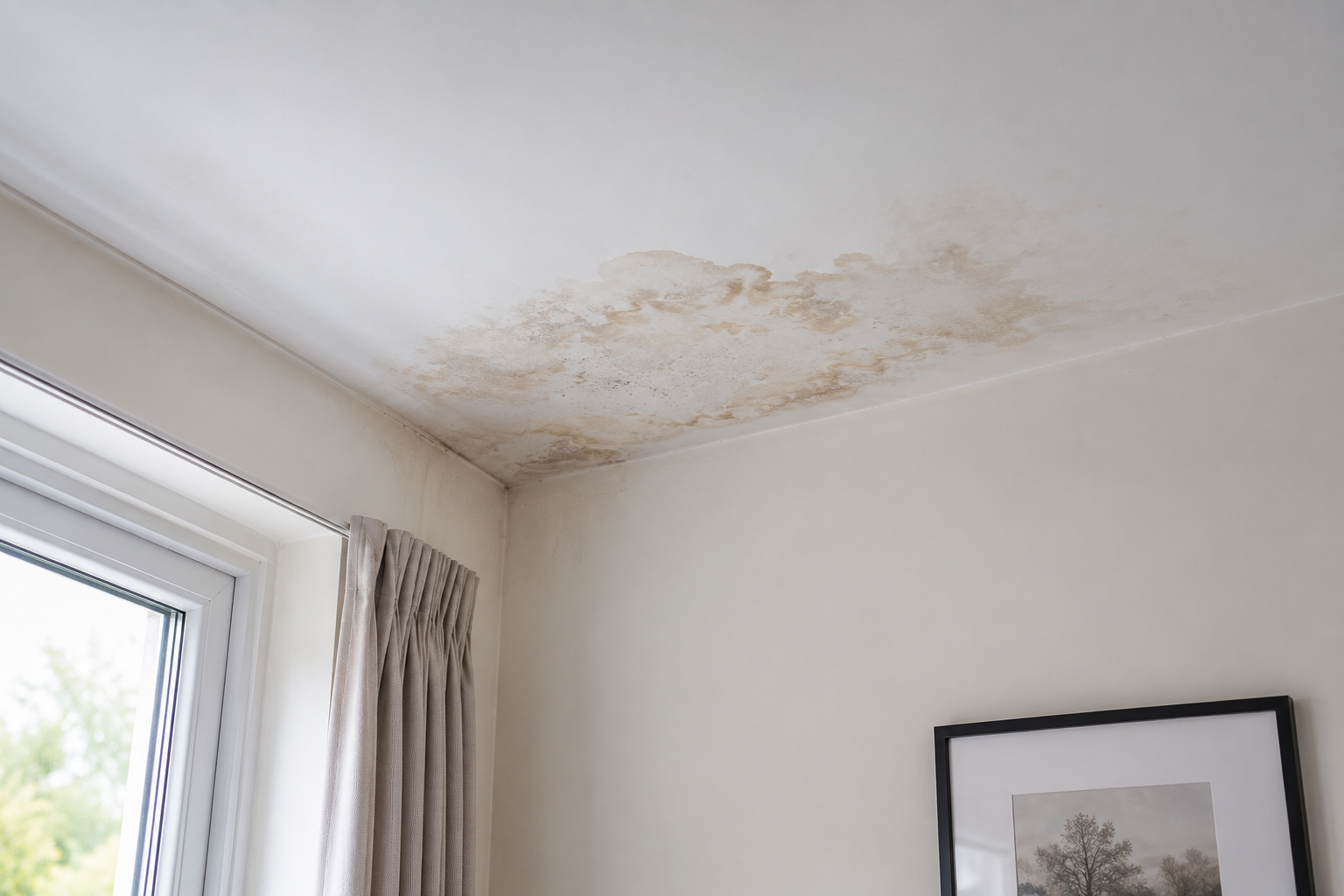
Damp marks near ceilings, upstairs walls or window corners can sometimes be linked to blocked gutters or failing roof drainage.
Not all damp originates from plumbing or condensation. In many UK homes, particularly older properties, overflowing gutters repeatedly soaking exterior walls can eventually allow moisture to migrate inward.
Common warning signs include:
- Brown ceiling stains
- Peeling paint near rooflines
- Musty smells upstairs
- Damp patches appearing after heavy rain
- Wallpaper lifting near external walls
The timing often matters. If damp becomes worse during prolonged rainfall, the issue may be connected to exterior drainage rather than internal humidity alone.
Gutters Overflowing During Rain
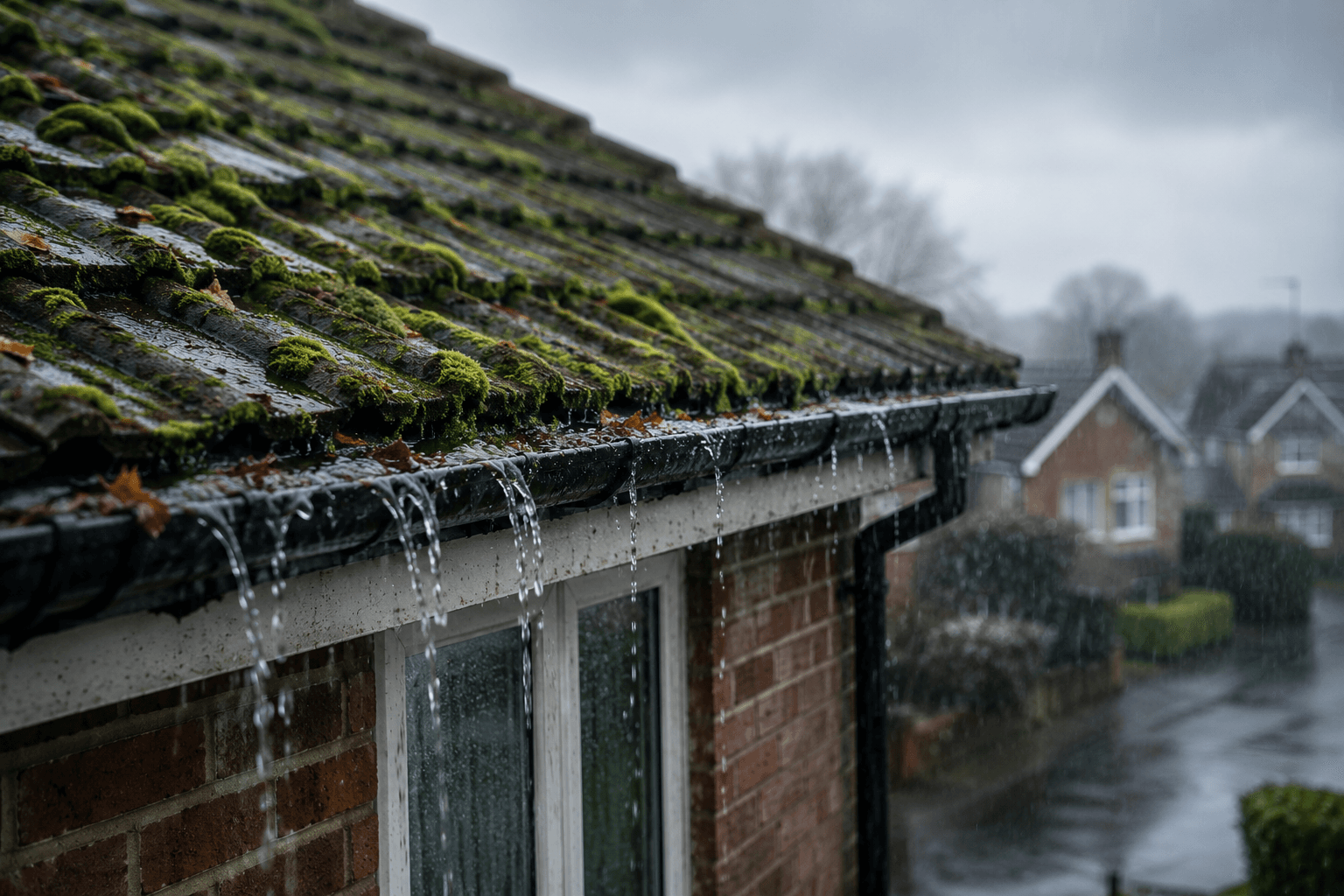
Water pouring over gutter edges during rainfall is one of the clearest signs the system is no longer draining properly.
Many people assume heavy rain is simply overwhelming the guttering. In reality, healthy gutters are designed to manage substantial rainfall.
Overflowing usually suggests:
- Leaves blocking water flow
- Moss compacted inside gutters
- Downpipes partially blocked
- Standing water causing overflow points
- Poor drainage around roof valleys
Overflowing water often leaves dark streaks on render and brickwork beneath the gutter line. Over time, repeated saturation can contribute to algae, staining and damp penetration.
Plants Growing in Gutters
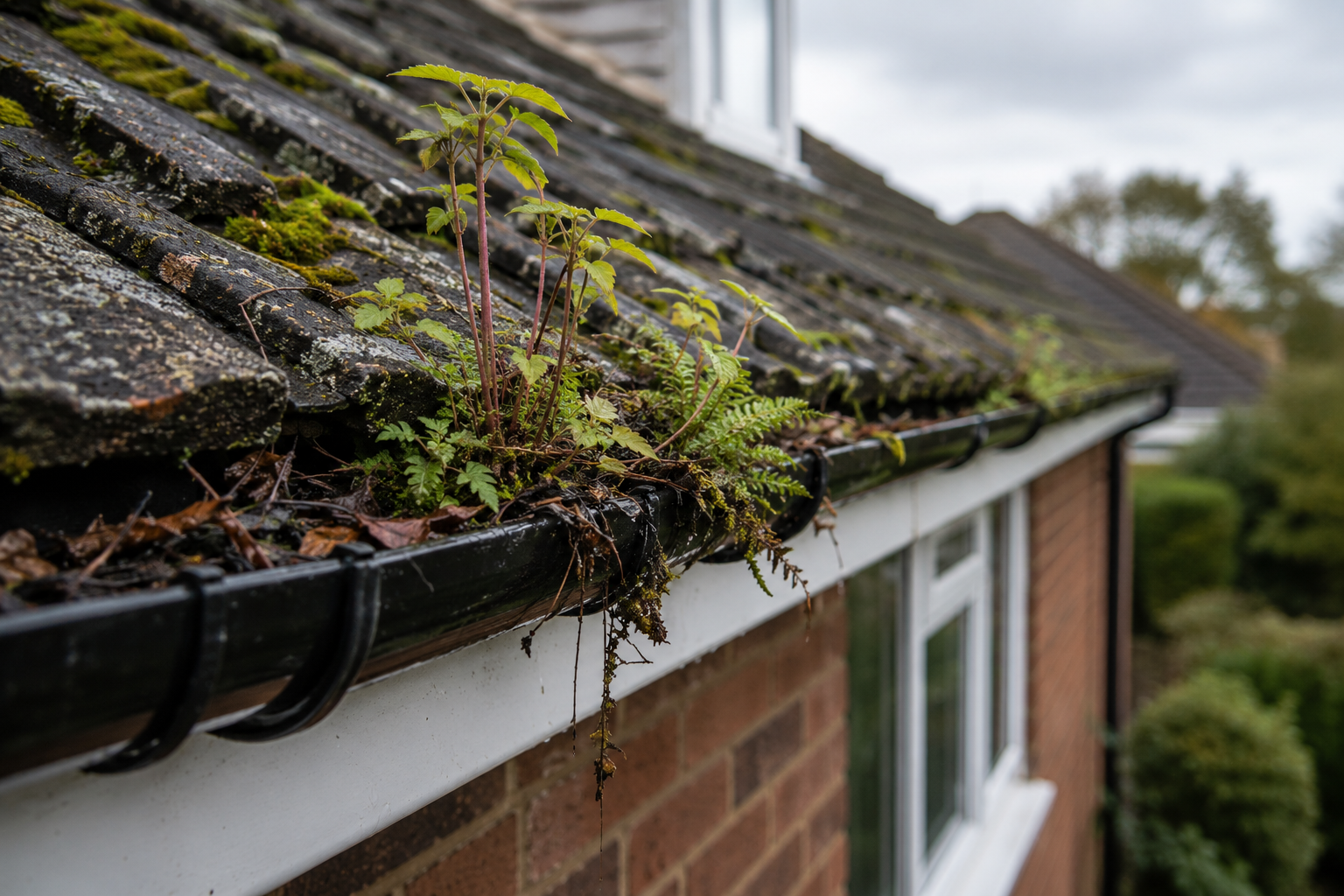
Plants growing from gutters usually indicate debris has been sitting wet inside the system for a long time.
Seeds naturally collect in trapped moss, leaves and organic material. Given enough moisture, gutters effectively become shallow planters attached to the house.
While it can look strangely harmless from the ground, vegetation inside gutters often means:
- Water is no longer flowing correctly
- Gutter weight has increased significantly
- Drainage is partially blocked
- Moisture is remaining trapped continuously
The added weight from wet debris and plant growth can also strain brackets and joints over time.
Why Roofs Turn Green
A green roof is usually a sign of moss, algae or lichen growth caused by trapped moisture and shaded conditions.
North-facing roofs, tree-covered properties and damp UK winters create ideal conditions for moss growth. Once established, moss behaves differently from ordinary dirt.
It holds water.
That moisture retention keeps roof surfaces wetter for longer after rain, particularly during colder months. Over time this can:
- Shorten tile lifespan
- Increase freeze-thaw stress
- Encourage further moss spread
- Block gutters with loose debris
Many homeowners only notice the moss aesthetically at first. But the operational problem usually arrives later when drainage systems begin clogging.
Moss Blocking Drains and Gutters
Roof moss rarely stays on the roof permanently.
During rainfall and windy weather, loose fragments gradually wash into gutters, downpipes and drains. Over time, this creates thick organic sludge that slows drainage and traps additional debris.
Common signs include:
- Slow-draining downpipes
- Overflowing gutters during moderate rain
- Standing water inside gutter channels
- Blocked ground drains near the property
- Dark staining around gutter joints
Many local gutter cleaning requests actually begin as roof moss problems higher up the property.
Slipped Roof Tiles From Moss Weight
Heavy moss build-up can gradually contribute to tile movement on some roofs.
Wet moss becomes surprisingly heavy, especially during winter when it remains saturated for long periods. Combined with freeze-thaw cycles, this can place additional stress on older or already weakened roof areas.
Warning signs may include:
- Uneven tile lines
- Small gaps appearing between tiles
- Loose fragments falling into gutters
- Visible roof sagging in isolated areas
Not every moss-covered roof becomes structurally dangerous. But significant build-up should not simply be ignored for years.
Birds Nesting in Blocked Gutters
Blocked gutters often create surprisingly attractive nesting conditions for birds.
Warm debris, standing moisture and sheltered corners provide protected spaces for nesting materials to gather.
Bird activity around gutters can sometimes indicate:
- Heavy debris accumulation
- Standing organic material
- Neglected gutter corners
- Loose roofline access points
Once nesting begins, drainage can deteriorate even faster as twigs and compacted material restrict water flow further.
Exterior Wall Stains and Dark Streaks
Black streaks, green staining and discoloured exterior walls are often linked to overflowing or leaking gutter systems.
When water repeatedly spills down the same section of wall, moisture encourages algae and dirt accumulation that becomes increasingly visible over time.
This is particularly common on:
- Rendered homes
- White exterior walls
- North-facing elevations
- Properties with overflowing valleys or joints
Many homeowners clean the wall itself without realising the gutter above continues recreating the problem every time it rains.
Why UK Weather Makes Gutter Problems Worse
The British climate creates ideal conditions for gradual exterior drainage issues.
Long wet periods, leaf fall, moss growth and freeze-thaw cycles all compound over time. Coastal homes often deal with additional moisture exposure, while tree-lined suburban streets gather leaves and organic debris rapidly during autumn.
Properties near mature trees or shaded gardens usually require more regular maintenance because gutters rarely dry fully between rainfall periods.
That lingering dampness allows moss, algae and blockages to establish far more easily.
When to Book Roof or Gutter Cleaning
Most homes benefit from periodic exterior maintenance before problems become visible internally.
Many homeowners book gutter cleaning during:
- Late autumn after leaf fall
- Early spring maintenance season
- After noticing overflow during rain
- Before selling a property
- After spotting moss build-up on the roof
Roof cleaning and moss removal are also commonly requested when gutters repeatedly block despite recent clearing.
You can compare roof cleaning services, browse gutter specialists or explore trusted local exterior cleaners through FindTrustedCleaners.com.
Frequently Asked Questions
Can blocked gutters cause damp inside the house?
Yes. Overflowing gutters can repeatedly soak exterior walls and roof areas, which may eventually contribute to internal damp patches.
Why is moss growing on my roof?
Moss commonly grows on damp, shaded roof areas where moisture remains trapped for long periods.
Are plants growing in gutters a problem?
Usually yes. Plants indicate trapped debris and poor drainage, which can eventually lead to overflowing gutters and excess weight.
Can roof moss damage tiles?
Heavy moss build-up can retain moisture and contribute to tile stress, particularly on older roofs.
Why does water pour over my gutters during rain?
This is often caused by blockages preventing water from flowing correctly through the gutter system.
Related Services and Guides
- Gutter cleaning services
- Roof cleaning services
- Pressure washing services
- Window cleaning services
- Explore cleaners across West Sussex
- Read more home maintenance guides
Final Thoughts
Most serious roof and gutter problems begin quietly.
The warning signs are usually there long before major water damage arrives. A little moss. A blocked corner. Water behaving slightly differently during rain.
Homes rarely deteriorate all at once. More often, they slowly absorb neglect until something visible finally appears indoors.
Good exterior maintenance is not really about keeping a roof spotless. It is about helping the whole property stay dry, stable and easier to look after over time.